
Latest Publications

Sampled publications
Association of Optimism, Self-Efficacy, and Resilience with Life Engagement Among Older Adults with Severe Climate Anxiety: Sensitivity of a Path Model: This study aimed to assess the association of optimism with life engagement and ascertain whether this relationship is mediated by self-efficacy and resilience among older adults with severe climate anxiety.


Association of workplace support for health with occupational health literacy and illness avoidance: moderated mediation by functioning through a salutogenic lens: This study aimed to investigate whether there is a moderated mediation by functioning in the relationship between workplace support for health, occupational health literacy, and illness avoidance.
Association of frailty with physical activity behaviour and well‑being in older employees: moderated mediation by functional difficulty: Many studies have highlighted the association between frailty, physical activity behaviour (PAB), and well-being, but no study has investigated a potential moderated mediating role of functional difficulty in this relationship. This association may not be the same between different income levels. This study, therefore, assessed the above moderated mediation between low- and higher-income samples.







Interactions of depression, anxiety, and sleep quality with menopausal symptoms on job satisfaction among middle-aged health workers in England: a STROBE-based analysis: This study examined the association between menopausal symptoms and job satisfaction, and ascertained whether three psychosomatic factors (e.g., anxiety, depression, and sleep quality) interact with menopausal symptoms on job satisfaction.
Internet self-efficacy moderates the association of information technology ability with successful ageing among older employees in three African samples: The literature suggests that two distinct competencies [i.e., information technology ability (ITA), and internet self-efficacy] are necessary for the effective use of information technologies for successful ageing, but no study has examined the association of these skills on successful ageing and its domains (i.e., illness avoidance, functioning, and engagement with life). This study investigated whether Internet Self-Efficacy (ISE) moderates the potential association of ITA with successful ageing.
Discrimination of older peers is associated with workplace age discrimination: moderation by occupational health literacy: Workplace Age Discrimination Experienced (WADE) can be disorientating and detrimental to well-being. Hence, older employees would like to avoid it, but those who experience it may discriminate against their older peers. WADE may be associated with Age Discrimination of Peers (ADP), and this relationship can be moderated by Occupational Health Literacy (OHL). This study aimed to assess the association of WADE with ADP and to ascertain whether this relationship is moderated by OHL.
Association of Information Technology Ability, Workplace Social Engagement, and successful ageing: validation of a short measure with three African samples: This study examined the association of workplace social engagement (WSE) and information technology ability (ITA) with successful ageing and validated a brief scale measuring WSE. The interaction of WSE and ITA on successful ageing was also assessed.
Association of Frailty with Functional Difficulty between Older Women and Men in Two Samples with Different Income Levels: Research to date suggests that frailty is higher in women and is associated with functional difficulty. This study builds on the evidence by examining the association between frailty and functional difficulty between low- and higher-income groups and between older men and women in these income groups.

ADAPTED SERVQUAL: A Health Service Quality Scale Incorporating Indicators of Sanitation and Hygiene: Many scales have been developed to measure health care quality over the years, but no scale available today incorporates all important indicators of sanitation and hygiene in health care. This study therefore assessed the psychometric properties of an adapted scale, hereby called ADAPTED SERVQUAL, in an attempt to provide a scale that includes relevant indicators of hospital hygiene and sanitation.
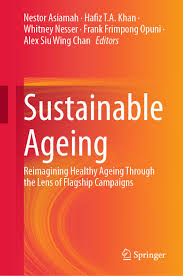
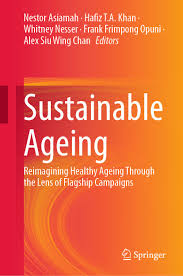
Sustainable Ageing: This book uniquely operationalizes "sustainable ageing" as a concept for reimagining ways by which: (1) social and health threats (i.e., climate change events, extreme industrialization, infectious disease outbreak, and war) can constrain the implementation of healthy ageing campaigns or limit their outcomes, and (2) potential transdisciplinary strategies can be rolled out to optimize healthy ageing through the campaigns in contexts experiencing the threats.
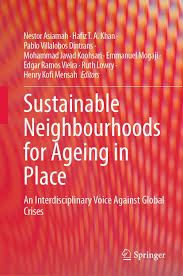
Sustainable Neighbourhoods for Ageing in Place: This timely book provides an understanding of how an ageing population can maintain health in the ageing process in their preferred homes and neighbourhoods while coping with global crises of climate change events, infectious diseases, systemic violence, and radical or extreme industrialisation. It is the first-known volume to consider the four crises as health and social threats to healthy longevity from a sustainability perspective.
Chapters in a Book

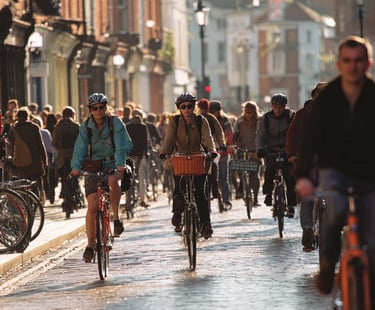

Psychology of “Ageing in Place” Amidst Health and Social Threats: Perspectives on the Decade of Healthy Ageing: The concept of diminishing life space posits that neighbourhoods facing health and social threats (i.e. war or violence, climate change, extreme industrialisation, and outbreaks of infectious diseases) less support “ageing in place.” Older victims of these threats are less capable of utilising neighbourhood resources (e.g. services, parks, and social support) to maintain health. This chapter extends the scope of the concept by putting forward the ideal psychology for “ageing in place” and proffering implications for healthy ageing.
Ageing in Place: The Present and Future Social and Health Threats: This chapter aims to provide a heuristic as a theoretical lens through which stakeholders can understand how the global crises affect life space and ageing in place. We utilised the heuristic to explain the concept of psychological distance and how it serves as a premise around which life space may diminish due to global crises.
A Health Promotion Perspective on the “Decade of Healthy Ageing” Initiative: Many ageing initiatives have been developed in the past decades, but the “Decade of Healthy Ageing 2021–2030” is a promising flagship initiative intended to support older adults. This chapter aims to provide a health promotion perspective to this initiative. This chapter suggests that support intended for older adults through the initiative should be delivered over the life course with a health promotion (salutogenic) approach, a pathway that supports all age groups, emphasises disease prevention and operates on a policy-driven health promotion agenda.
Books
My Social Media Handles
You can connect with me on LinkedIn, ResearchGate, Google Scholar, and Facebook
Emails
n.asiamah@essex.ac.uk
© 2025. Nestor Asiamah. All rights reserved.
nestor.asiamah@myport.ac.uk
address
Wivenhoe Park
CO4 3SQ
Colchester, Essex
England, United Kingdom
School of Health and Social Care
University of Essex